TMJ Headache vs Migraine: How Are They Different?
A headache that begins near the temple can feel like migraine, a TMJ-related headache, or both. The useful distinction is not pain location alone. Comparing jaw function, headache behavior, associated symptoms, and triggers can help a clinician determine whether the temporomandibular joint and chewing muscles are contributing to the pain.
Concerned about recurring headaches with jaw pain or clenching? Call Encino Center for Sleep and TMJ Disorders at (818) 300-0070 to schedule a consultation.
TMJ headache vs migraine, in brief: A TMJ-related headache is more likely to change with chewing, clenching, jaw movement, or pressure on the chewing muscles. Migraine more often causes moderate to severe recurring attacks with nausea, sensitivity to light or sound, or worsening during routine activity. These patterns can overlap, so symptoms alone cannot confirm a diagnosis.
TMJ Headache vs Migraine at a Glance
A TMJ-related headache and migraine may both cause temple or facial pain, but their associated patterns differ. Jaw-linked pain tends to track with chewing-system symptoms. Migraine is a neurological disorder whose attacks commonly include sensory sensitivity, nausea, and activity-related worsening. A person can also experience both conditions.
| Pattern | More suggestive of a TMJ-related headache | More suggestive of migraine |
|---|---|---|
| Common pain area | Temple, jaw joint, cheek, ear area, or chewing muscles | One or both sides of the head; may involve the temple, face, or neck |
| Typical trigger | Chewing, clenching, prolonged talking, hard foods, or wide opening | Individual triggers vary; attacks may occur without an obvious trigger |
| Jaw findings | Jaw tenderness, limited opening, painful clicking, or pain reproduced by palpation | Jaw findings are not required, although migraine and TMD may coexist |
| Associated symptoms | Jaw fatigue, facial muscle soreness, tooth wear, or ear-area discomfort | Nausea, vomiting, light or sound sensitivity, and sometimes aura |
| Effect of movement | Jaw use may reproduce or intensify pain | Routine physical activity may worsen an attack |
This comparison is a guide, not a diagnostic test. Headache disorders and temporomandibular disorders, often shortened to TMD, include multiple subtypes. A careful history and examination are needed to identify the most likely pain source.
What Patterns May Suggest a TMJ-Related Headache?
A TMJ-related headache is most strongly suggested when familiar temple or facial pain changes with jaw movement, function, or parafunctional habits such as clenching. Tenderness in the temporalis or masseter muscles, painful joint movement, limited opening, and other signs and symptoms of TMJ disorder add useful context.
1. The pain changes with jaw use
Consider whether chewing a firm meal, yawning, singing, prolonged talking, or holding the mouth open during dental care changes the headache. Pain that reliably appears or intensifies during jaw function deserves a closer look at the chewing muscles and joints.
2. Clenching or grinding accompanies the headache
Awake clenching and sleep-related tooth grinding can load the chewing system. Some people notice morning jaw fatigue, sore temples, tooth sensitivity, or signs of wear. These findings do not prove that the jaw is the only headache source, but they help shape an evaluation.
3. Jaw symptoms occur alongside head pain
- Pain or tenderness in front of the ear
- Limited, uneven, or painful mouth opening
- Jaw locking or catching
- Painful clicking, popping, or grinding
- Cheek, temple, or chewing-muscle tenderness
Joint sounds alone are common and do not always indicate a disorder. Their meaning depends on whether they accompany pain, altered function, or other clinical findings.
4. Examination can reproduce the familiar pain
During a focused evaluation, a clinician may assess jaw range of motion, muscle tenderness, joint sounds, bite relationships, and neurologic features. Reproducing the patient’s familiar headache during specific jaw tests can be informative. Learn more about the practice’s TMJ disorder diagnosis process.
If jaw movement, clenching, or chewing seems connected to your headaches, contact Encino Center for Sleep and TMJ Disorders for an individualized evaluation.
What Patterns Are More Consistent With Migraine?
Migraine is more than a severe headache. It is a recurring neurological disorder that often produces throbbing or pulsating pain, nausea, light or sound sensitivity, and symptoms that worsen with routine activity. Attacks may affect one or both sides, and some people experience aura before or during an attack.
Migraine symptoms often extend beyond the jaw
According to the National Institute of Neurological Disorders and Stroke, migraine attacks may include nausea, vomiting, and sensitivity to light, sound, or odors. Some people need to stop normal activities and rest in a dark, quiet setting.
Aura can occur, but it is not required
Aura consists of temporary neurological symptoms that may include visual changes, tingling, numbness, or speech difficulty. Many people with migraine never experience aura. New neurological symptoms still require appropriate medical assessment because other conditions can resemble migraine aura.
The attack has a recurring pattern
Duration, frequency, associated symptoms, and response to previous treatments can help a medical professional classify a headache. Keeping a diary of attacks, jaw symptoms, sleep, foods, activity, medications, and menstrual cycle timing, when relevant, gives the clinician more reliable information than memory alone.
Patients with recurrent or disabling migraine-like attacks should discuss medical evaluation and headache management with an appropriate healthcare professional. A TMJ assessment does not replace neurological or primary-care evaluation when migraine is suspected.

Why Can TMD and Migraine Overlap?
TMD and migraine can overlap because the face, jaw, and head share connected sensory pathways, including pathways involving the trigeminal nerve. Pain in one region may influence how pain is felt in another. In addition, stress, disrupted sleep, muscle tension, and pain sensitization can affect both symptom patterns.
Overlap creates three common possibilities:
- Primarily jaw-related pain: Headache closely tracks with jaw function and clinical findings.
- Primarily migraine: Neurological attack features dominate without a meaningful jaw contribution.
- Coexisting conditions: Migraine and TMD both require attention as separate but interacting problems.
This is why a single symptom such as temple pain, ear-area discomfort, or morning headache is not enough to identify the cause. Treatment aimed at the jaw should not be presented as a guaranteed migraine cure. The appropriate plan depends on what the evaluation finds and may involve collaboration among an orofacial pain specialist, primary-care clinician, neurologist, physical therapist, or other professional.
How Do Specialists Evaluate Jaw Pain and Headaches?
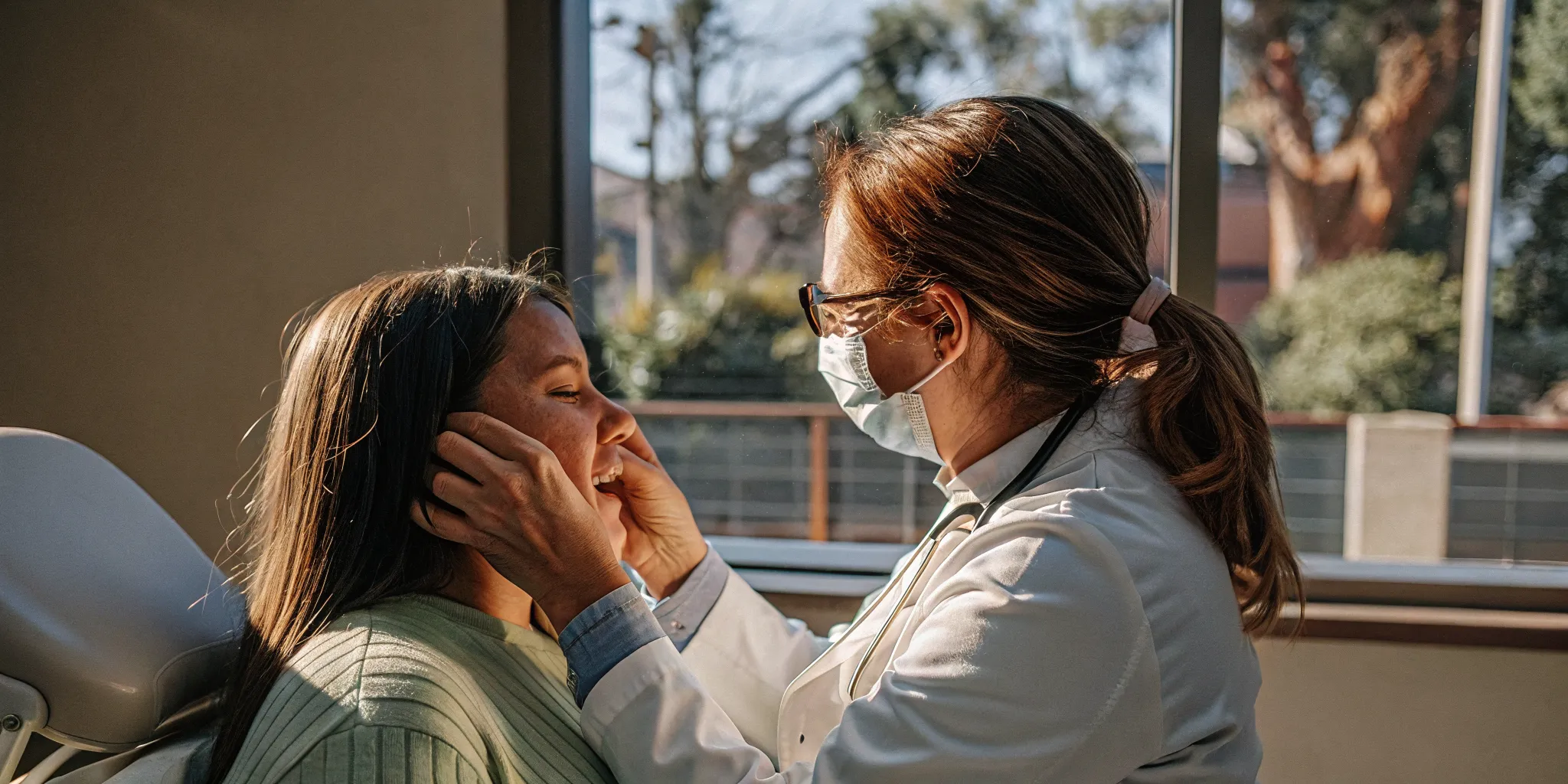
A specialist evaluation separates clues from assumptions. It typically combines a detailed symptom history with examination of jaw motion, joints, chewing muscles, neurologic features, and possible referred-pain patterns. Imaging may be considered when findings or history indicate that it could change diagnosis or treatment planning.
History: define the pattern
The clinician may ask when the pain began, how long episodes last, where pain travels, what makes it better or worse, and whether nausea, sensory sensitivity, aura, neck pain, sleep concerns, or jaw symptoms occur. Medication use matters too, because frequent use of some acute headache medicines can contribute to medication-overuse headache.
Examination: test the working hypotheses
A focused exam may assess mouth opening, jaw movement, joint sounds, muscle and joint tenderness, cranial nerve findings, and whether a maneuver reproduces the familiar pain. At Encino Center for Sleep and TMJ Disorders, evaluation emphasizes comprehensive diagnosis before discussing TMJ disorder treatment options.
Imaging: use it selectively
Imaging is not automatically needed for every headache or jaw click. When indicated, different studies answer different questions. For example, a clinician may consider imaging to evaluate bony structures, joint position, soft tissue, or other suspected conditions. Results should be interpreted alongside symptoms and examination findings.
When Should a Headache Receive Urgent Medical Attention?
Seek urgent medical care for a sudden, extremely severe headache or a headache accompanied by new neurological symptoms, fever with a stiff neck, fainting, confusion, seizure, significant head injury, or other rapidly concerning changes. These features require medical assessment rather than a routine TMJ appointment.
- A sudden headache that reaches maximum intensity quickly
- New weakness, numbness, facial droop, trouble speaking, or vision loss
- Fever, stiff neck, confusion, fainting, or seizure
- A new headache after a significant injury
- A new or substantially changed headache pattern during pregnancy, after age 50, or with cancer or immune suppression
- Rapidly worsening frequency, severity, or neurological symptoms
Call 911 for signs of stroke or another medical emergency. Do not delay emergency care while trying to decide whether symptoms come from the jaw or migraine.
What Should You Do if the Cause Is Unclear?
If the cause is unclear, document the pattern and seek an evaluation rather than relying on self-diagnosis. Note headache timing, intensity, associated symptoms, jaw activity, sleep quality, and medications. A clinician can then decide whether the pattern calls for medical headache care, a TMJ evaluation, or coordinated care.
- Track symptoms for several weeks: Record headache behavior and jaw-related clues without delaying care for red flags.
- Bring relevant records: Include prior imaging, medication lists, diagnoses, and treatment responses.
- Describe function, not just pain: Mention chewing limits, locking, sound sensitivity, nausea, aura, and activity-related worsening.
- Ask how the diagnosis was reached: A sound plan should connect findings to recommendations and explain alternatives.
The Encino practice focuses on evidence-based assessment of TMJ disorders and orofacial pain and can collaborate with physicians and allied professionals when symptoms cross specialties. Explore the center’s broader TMJ disorder care approach.
To discuss recurring jaw pain and headaches with a specialist, call Encino Center for Sleep and TMJ Disorders at (818) 300-0070.
Frequently Asked Questions
Can TMJ problems cause headaches every day?
TMD can contribute to frequent headaches in some people, especially when familiar pain changes with jaw function or is reproduced during examination. Daily headache also has other possible causes. Frequent or changing symptoms deserve professional evaluation rather than an assumption that the jaw is responsible.
Can migraine cause jaw or facial pain?
Yes. Migraine can be felt in the face, temple, or jaw region and may coexist with TMD. Nausea, sensory sensitivity, activity-related worsening, and a recurring attack pattern can support a migraine diagnosis, but a clinician should interpret the complete history.
Does jaw clicking mean my headache is caused by TMJ disorder?
No. Jaw clicking is common and may occur without pain or dysfunction. It becomes more relevant when it accompanies pain, locking, limited opening, altered jaw function, or a headache that changes with jaw use.
Will treating TMD stop migraine attacks?
Not necessarily. Appropriate TMD care may help jaw-related symptoms when TMD is present, but it should not be promised as a migraine cure. People with coexisting migraine may also need medical headache management and coordinated care.
A Careful Diagnosis Comes Before Treatment
The most important difference in a TMJ headache vs migraine comparison is the pattern around the pain. Jaw-related symptoms, migraine features, red flags, and examination findings all matter. Because the conditions can coexist, a careful evaluation is safer and more useful than choosing a label from one symptom.
Encino Center for Sleep and TMJ Disorders provides specialist-level evaluation for TMJ disorders and orofacial pain in Encino, California. Dr. Michael Simmons, DMD, is an ADA-recognized specialist in orofacial pain and a Diplomate of the American Board of Orofacial Pain. Recommendations depend on each patient’s history and clinical findings.
Ready to take the next step? Call (818) 300-0070 to schedule a consultation.