
Persistent sleepiness at work is not always a matter of motivation, stress, or a demanding schedule. Loud snoring, witnessed pauses in breathing, morning headaches, and unrestful sleep can accompany obstructive sleep apnea and affect alertness during the day. Managing sleep apnea at work starts with an accurate evaluation. A treatment plan that can be followed consistently, plus an honest review of the safety demands of your job.
Schedule a consultation about sleep apnea and work
By Dr. Michael Simmons, DMD, Director
Answer: Managing sleep apnea at work means identifying the condition, following clinically appropriate treatment, and responding to unsafe sleepiness before a shift. CPAP remains the gold standard for many patients. A custom oral appliance may be appropriate for selected patients, including some who cannot tolerate CPAP. Disclosure and accommodations depend on the person’s duties, employer process, and applicable law.
Workplace decisions require care. A safety-sensitive role involving driving, machinery, heights, emergency response, or direct patient care may require prompt clinical guidance. Disclosure is not a decision to make from a general internet rule. It should account for symptoms, treatment status, essential job functions, workplace policy, and applicable occupational requirements. For a broader overview of warning signs, visit the practice’s guide to snoring and sleep apnea.
How Sleep Apnea Affects Performance and Safety at Work
Untreated obstructive sleep apnea can fragment sleep and contribute to excessive daytime sleepiness, reduced concentration, slower reactions, and difficulty with memory. These effects matter most when a job requires sustained attention, rapid decisions, precise coordination, or responsibility for another person’s safety. Symptoms should be evaluated rather than blamed on a busy schedule.
Obstructive sleep apnea involves repeated narrowing or blockage of the upper airway during sleep. Breathing disruptions can fragment sleep even when a person does not fully awaken or remember the events the next morning. Someone may spend a normal number of hours in bed yet wake feeling unrested and remain sleepy during the day. The National Heart, Lung, and Blood Institute overview of sleep apnea explains why diagnosis and treatment should be individualized.
At work, excessive sleepiness may appear as difficulty staying focused, slower responses, forgetfulness, irritability, or an unusual struggle to complete familiar tasks. These signs are not specific to sleep apnea. Shift work, insufficient sleep, medications, depression, other medical conditions, and long commutes can also contribute. A clinical assessment is more useful than trying to identify the cause from one difficult workday.
Safety deserves particular attention in roles involving commercial driving, machinery, construction, heights, emergency response, or direct patient care. A peer-reviewed review has examined the association between obstructive sleep apnea and occupational accident risk. This does not mean that every accident is caused by sleep apnea, and a diagnosis does not automatically determine whether someone can work. It does mean that persistent sleepiness and slowed thinking deserve prompt attention.
If you are struggling to stay awake, missing important details, or noticing slowed reactions before a safety-sensitive shift, follow your workplace safety process. Do not drive or operate equipment while too sleepy to do so safely. Ask a qualified clinician to review your symptoms, sleep schedule, medications, and possible sleep-disordered breathing. The cognitive effects of poor sleep can overlap with untreated sleep apnea, so both issues may need consideration.
Managing Sleep Apnea at Work in Safety-Sensitive Jobs
People in safety-sensitive jobs should discuss their actual duties, current symptoms, treatment adherence, and follow-up needs with a qualified clinician. A sleep apnea diagnosis does not create one universal work restriction. Work readiness depends on the condition, response to treatment, essential duties, and current employer or regulatory requirements.
Safety-sensitive work may include commercial driving, aviation, operating heavy machinery, working at heights, emergency response, construction, or clinical care. The relevant question is not simply whether a diagnosis exists. It is whether untreated symptoms, treatment side effects, inconsistent therapy, or another cause of fatigue could interfere with an essential duty.
Discuss the job, not only the diagnosis
Before making a work decision, write down the duties that require the most alertness. Include driving, long shifts, overnight work, climbing, lifting, monitoring, patient care, rapid response, or operation of equipment. Tell the clinician when sleepiness is most pronounced and whether it occurs during commuting, meetings, or repetitive tasks. This detail can be more useful than a general statement that you feel tired.
Create a documented treatment and follow-up plan
A plan may include sleep testing, review of results, treatment setup, equipment troubleshooting, and follow-up to assess response. The practice’s initial consultation information describes a comprehensive evaluation process. For some patients, care also involves collaboration with a sleep physician or another medical professional. Keep work demands and schedule changes in the discussion so the plan is realistic.
Do not self-clear for a safety-sensitive task based only on feeling better for one morning. Do not stop prescribed treatment because it is inconvenient at work. If treatment is not working, contact the treating team and ask what should be adjusted. Persistent sleepiness before a shift warrants a safe alternative to driving or operating equipment while you seek guidance.
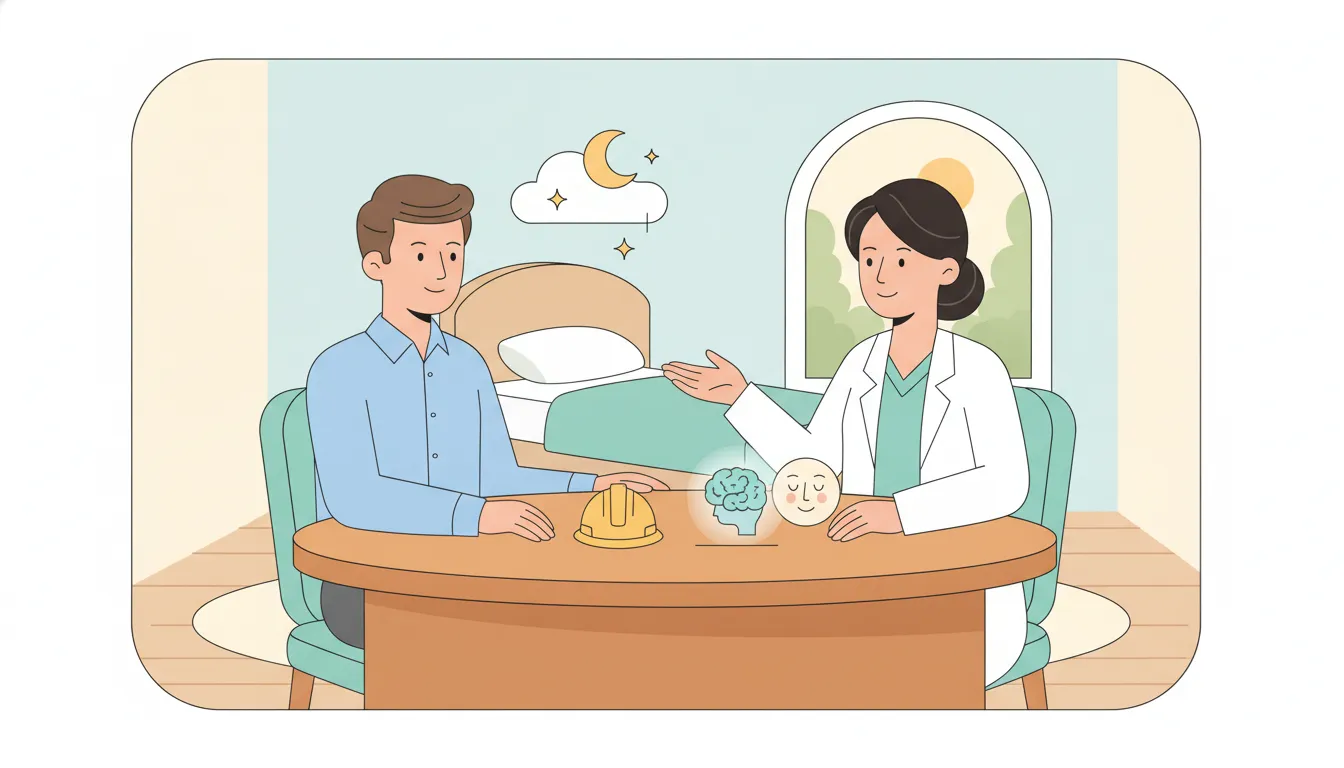
A work-safety discussion should address the person’s actual duties and current symptoms.
Should You Tell Your Employer About Sleep Apnea?
There is no universal yes-or-no answer about disclosing sleep apnea to an employer. Consider the safety responsibilities of the role, current symptoms, treatment needs, workplace policy, and applicable law. Begin with the clinician involved in your care and use the employer’s designated confidential process instead of sharing private details broadly.
A diagnosis does not automatically mean that a person cannot work or must tell every coworker. Disclosure may deserve closer consideration when untreated sleepiness could affect commercial driving, machinery operation, work at heights, emergency response, or direct patient care. Ask whether symptoms or treatment needs could interfere with an essential duty today.
Start with your sleep physician, dentist with appropriate sleep-medicine training, or another clinician involved in your treatment. Ask whether the condition appears controlled, whether additional testing or treatment adjustments are needed, and whether temporary precautions should be considered. A clinician can discuss health and work-readiness considerations, but cannot decide an employer’s policy or provide individualized employment-law advice.
If you need appointment time or schedule flexibility, speak with human resources, occupational health, or the person who handles medical accommodation requests. Ask what documentation is required, who will receive it, and how confidentiality is handled. You may not need to discuss your diagnosis with coworkers or provide more clinical detail than the formal process requests.
Employment laws and disclosure obligations vary by role, location, industry, and individual circumstances. If you are concerned about discrimination, licensing, commercial driving requirements, or a dispute over job duties, consult qualified employment counsel or the relevant occupational authority. Medical guidance and legal guidance serve different purposes and should not be conflated.
What Workplace Accommodations May Help During Treatment?
Possible workplace support during sleep apnea treatment may include protected time for evaluation and follow-up, a modified start time, limited schedule flexibility, or another role-specific adjustment. The appropriate request depends on symptoms, work duties, schedule, employer procedure, and applicable law. A clinical recommendation does not guarantee approval of a particular accommodation.
Beginning sleep apnea care may involve a consultation, sleep testing, treatment setup, equipment troubleshooting, and follow-up visits. Someone working rotating or overnight shifts may need to explain the actual schedule so treatment planning accounts for when the person sleeps, commutes, and works.
A modified start time or occasional appointment flexibility may help some patients attend care and maintain a consistent sleep opportunity. A person who travels between worksites may need a safe plan for storing treatment equipment. Someone in a fixed workplace may only need protected time for follow-up appointments. Requests should be specific, limited to the actual need, and made through the employer’s established process.
| Workplace concern | Practical next step |
|---|---|
| Persistent daytime sleepiness | Arrange a clinical evaluation and avoid safety-sensitive duties when too drowsy to work safely. |
| CPAP discomfort or inconsistent use | Contact the treating team about fit, comfort, equipment, or an appropriate alternative. |
| Safety-sensitive job requirements | Discuss work demands, monitoring, and current employer or regulatory requirements with a clinician. |
| Treatment-related appointments | Ask HR or occupational health about the established documentation and scheduling process. |
Do not use or store medical equipment in a way that creates an electrical, infection-control, privacy, or workplace-safety hazard. CPAP should be used as prescribed during intended sleep periods. If the device is uncomfortable or difficult to use, contact the treating team. A custom oral appliance may be considered for selected patients, including some who cannot tolerate CPAP, but treatment should not be changed solely for convenience at work.
The Centers for Disease Control and Prevention has discussed workplace sleep health and employee support as ways employers can promote alertness and safety. Its Sleep and Work guidance provides workplace context, but it does not create a universal accommodation entitlement or replace an employer’s review.
Contact Encino Center for Sleep and TMJ Disorders for evaluation options
Practical Strategies for Managing Sleep Apnea During the Workday
Workday strategies can reduce avoidable risk while clinical care is underway. They do not replace diagnosis or treatment.
Protect a regular sleep opportunity, follow prescribed therapy, and plan equipment and appointments. Act promptly when sleepiness makes driving, machinery, heights, or another safety-sensitive task unsafe.
- Protect a consistent sleep opportunity. Keep sleep and wake times as regular as the work schedule allows. If you work nights or rotate shifts, tell the treating team when and where you sleep. Caffeine and short naps should not be treated as substitutes for adequate sleep or medical care.
- Follow prescribed therapy as directed. Use CPAP consistently when it is prescribed, and report mask discomfort, dryness, pressure concerns, or difficulty maintaining use. CPAP is the gold-standard treatment for many patients. A custom oral appliance may be considered for selected patients, but it should be fitted and monitored by an appropriately trained clinician.
- Plan equipment and appointments before problems arise. Keep necessary treatment equipment available for travel, overnight work, or schedule changes. Ask the clinical team how to handle equipment problems, missed nights, or changing work hours. Do not alter treatment on your own.
- Keep follow-up appointments. Ongoing monitoring helps determine whether treatment is being used consistently and remains effective. Bring changes in symptoms, device concerns, and work schedule to follow-up so the plan can be adjusted based on evidence.
- Use a safety stop when necessary. If you are too sleepy to drive, operate equipment, work at heights, or perform another safety-sensitive task, stop and follow workplace procedures. Arrange safe transportation and contact the appropriate supervisor when necessary.
These steps are practical safeguards, not a substitute for individualized medical advice. A person with persistent sleepiness should not rely on willpower to remain alert through a hazardous task.
How Treating Sleep Apnea Can Support Work and Daily Life
Treating sleep apnea may support more consistent daytime alertness, but results depend on the diagnosis, treatment, adherence, and individual response. The process begins with evaluation and continues with follow-up. CPAP is the gold standard for many patients, while custom oral appliance therapy may be appropriate for selected patients when clinically indicated.
Sleep apnea care should be viewed as a clinical process rather than a promise of improved work performance. A sleep specialist or other qualified clinician can consider symptoms, sleep-study findings, severity, related health concerns, and work demands. This is particularly important when a job involves driving, machinery, heights, emergency response, or responsibility for another person’s safety.
For many patients, CPAP remains the gold standard. A properly fitted mask, gradual adjustment, equipment troubleshooting, and consistent use can make treatment more practical to maintain. Patients can review questions about CPAP use and expectations before discussing them with the treating team.
CPAP is not the only treatment that may be considered. For a patient who cannot tolerate CPAP. Or for someone with snoring or mild to severe obstructive sleep apnea who meets clinical criteria, custom oral appliance therapy may be an option. Oral appliances require professional fitting, monitoring, and follow-up. Learn more about oral appliance therapy and discuss whether it is clinically appropriate for your situation.

Treatment selection should follow diagnosis, clinical findings, and individual needs.
Encino Center for Sleep and TMJ Disorders provides comprehensive evaluation and treatment planning for sleep disorders, including collaboration with sleep physicians and other allied professionals when appropriate. Dr. Michael Simmons, DMD, Director, holds Diplomate status with the American Board of Orofacial Pain and the American Board of Dental Sleep Medicine. He also holds an MS in Sleep Medicine and Fellowship in the American Academy of Sleep Medicine. A consultation can help clarify the next appropriate step. No provider can guarantee a specific work outcome or treatment response.
Readers who want additional background can review the practice’s sleep apnea treatment overview and discuss questions with a qualified clinician.
Frequently Asked Questions
Can sleep apnea affect my ability to work safely?
It can contribute to excessive daytime sleepiness, reduced concentration, and slower reactions. The risk depends on symptoms, treatment status, job duties, and other causes of fatigue. Do not drive, operate machinery, work at heights, or perform another safety-sensitive task if you are too sleepy to do so safely. Arrange a clinical evaluation.
Do I have to tell my employer that I have sleep apnea?
There is no universal answer. Disclosure depends on the role, symptoms, treatment needs, workplace policy, and applicable law. Begin by asking your treating clinician about health and safety considerations. If workplace support is needed, use the employer’s HR or occupational-health process and share information only with the appropriate contact. Seek legal advice for legal questions.
What workplace accommodations might help while I begin treatment?
Depending on the situation, a person might request protected time for sleep testing or follow-up, limited schedule flexibility, a modified start time, or another role-specific adjustment. The request should be based on the actual treatment need and submitted through the employer’s established process. A clinical recommendation does not guarantee approval.
Can I drive or operate machinery if I am still very sleepy?
No one should drive or operate equipment while too sleepy to do so safely. Follow workplace safety procedures, notify the appropriate supervisor when necessary, and arrange safe transportation. Discuss persistent sleepiness promptly with a qualified clinician, especially when it occurs with snoring or witnessed breathing pauses.
Will treating sleep apnea help me stay alert at work?
Effective treatment may improve daytime sleepiness and alertness for some patients, but outcomes vary. CPAP remains the gold standard for many people. A custom oral appliance may be appropriate for selected patients, including some who cannot tolerate CPAP. Diagnosis, treatment selection, adherence, and follow-up all matter.
Contact Encino Center for Sleep and TMJ Disorders to plan your next step