
A bright phone screen in a dark bedroom can make it harder to feel sleepy, even when you are physically tired. The effect is not simply a matter of willpower or poor sleep habits. Evening light can interact with the body’s internal timing system and delay the signals that prepare you for sleep.
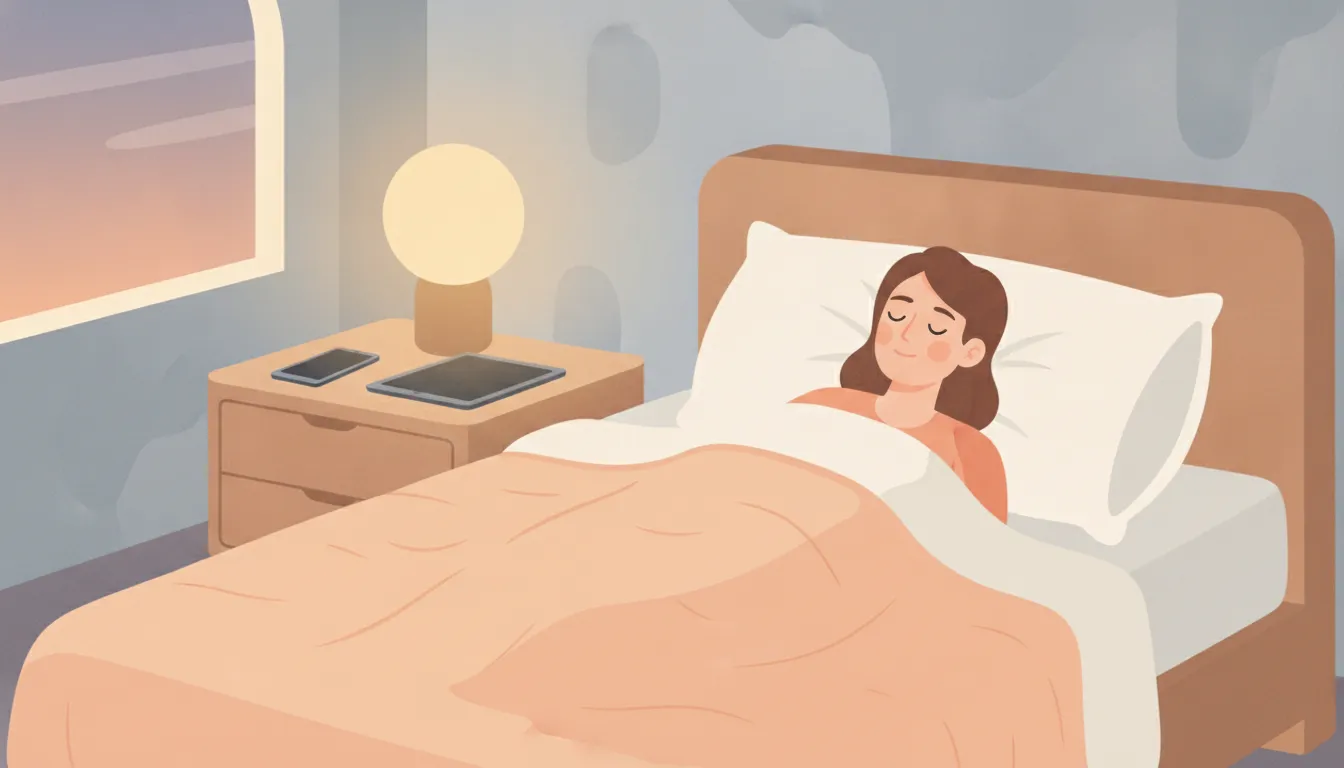
Blue light and sleep disruption are connected because blue and white light at night can suppress melatonin, shift circadian timing, and increase alertness. Reducing late-evening light may support better sleep, but persistent daytime sleepiness, loud snoring, gasping, or unrefreshing sleep should not automatically be blamed on screens. Those symptoms may warrant evaluation for sleep apnea or another sleep disorder.
Schedule a consultation to discuss your sleep concerns
The biology becomes clearer when we look at what blue light is, how the eyes detect it, and why its effect on melatonin is strongest at the wrong time of day.
What Blue Light Is and Why It Affects Melatonin
Blue light is one portion of the visible light spectrum. It is emitted naturally by the sun and is also produced by many modern light sources, including fluorescent and LED bulbs, televisions, computers, tablets, and smartphones. The term does not mean that a device is literally shining a blue-colored image into your eyes. It refers to specific wavelengths of light that can influence the body’s biological timing system. The Sleep Foundation describes blue light as a wavelength commonly emitted by electronic devices and artificial lighting.
During the day, exposure to these wavelengths is generally useful. Blue light can support alertness, attention, reaction time, and mood when it occurs at the appropriate point in the circadian cycle. The concern is primarily the timing and intensity of exposure, especially in the evening when the body is preparing for sleep. Harvard Health notes that blue wavelengths that are beneficial during daylight appear to be the most disruptive at night.
How the eyes communicate with the brain
Light entering the eyes does more than create visual images. Specialized retinal photoreceptors detect environmental light and send timing information to brain systems that help coordinate the sleep-wake cycle. At night, exposure to blue or white light can activate these photoreceptors and signal that it is still biologically daytime. The CDC explains that this signal can suppress melatonin and shift circadian rhythms.
Melatonin is a hormone that helps regulate the natural sleep-wake cycle. As evening darkness increases, melatonin normally rises and contributes to the body’s transition toward sleep. Bright, short-wavelength light can delay or reduce that signal. This does not mean that every screen session will cause a clinically important problem, or that blue light is the only reason someone sleeps poorly. Stress, irregular schedules, caffeine, medications, pain, breathing problems, and other sleep disorders can also affect sleep. However, evening light exposure is a modifiable factor that can make it harder for some people to feel ready for bed.
Why nighttime exposure matters more
The surrounding environment also changes the effect of a screen. A bright phone or tablet used in an otherwise dark room can provide a concentrated source of light close to the eyes. Mayo Clinic notes that light from mobile devices, particularly in dimly lit rooms, may interfere with melatonin, a mechanism that helps explain the relationship between blue light and sleep disruption.
Other colors are not biologically identical. According to the CDC, the relevant retinal photoreceptors respond minimally to yellow and orange light and do not respond to red light in the same way. Warmer, dimmer evening lighting may therefore be less disruptive than bright blue-rich lighting, although reducing overall evening brightness and allowing time away from stimulating activities can also matter. The practical goal is not to fear screens, but to protect the normal transition from daytime alertness to nighttime sleep.
What Does Blue Light Actually Do to Your Circadian Rhythm?
Your circadian rhythm is an internal timing system that coordinates sleep, wakefulness, alertness, body temperature, and other daily functions. It is not perfectly fixed at 24 hours. The average human circadian cycle is approximately 24.25 hours, so regular exposure to daylight helps keep the internal clock aligned with the solar day and the surrounding environment. Dr. Charles Czeisler of Harvard Medical School demonstrated this role of daylight in research reported by Harvard Health Publishing.
At night, the timing and intensity of light become important. Light entering the eye is detected not only by the photoreceptors used for vision, but also by specialized cells called intrinsically photosensitive retinal ganglion cells, or ipRGCs. These cells contain the photopigment melanopsin and send information about environmental light to brain systems involved in circadian regulation. As described in Nature Reviews Neuroscience, ipRGCs influence health-related behaviors and physiology beyond image formation.
Why timing matters more than brightness alone
Even relatively dim light can affect the biological clock when it reaches the eyes during the sensitive evening or nighttime period. Harvard Health notes that eight lux, a level brighter than many night-lights and exceeded by most table lamps, can influence circadian rhythm and melatonin secretion. This does not mean every brief exposure to a small light source will cause a clinically important problem. It does mean that repeated evening exposure should not be dismissed simply because a screen or lamp appears dim.
Blue wavelengths are particularly effective at signaling daytime to the brain. Blue or white light at night can activate retinal photoreceptors, suppress melatonin, and shift circadian timing, according to the Centers for Disease Control and Prevention. Melatonin is a hormone that helps regulate the natural sleep-wake cycle. When its normal nighttime rise is delayed or reduced, a person may feel more alert at the intended bedtime. Take longer to fall asleep, or experience a mismatch between preferred sleep hours and the demands of the next morning.
Why warm light is generally less disruptive
The response is not identical for every color of light. The CDC explains that the relevant retinal photoreceptors do not respond to red light and respond only minimally to yellow and orange light. These warmer wavelengths are therefore generally less disruptive to circadian signaling than blue-rich light, although brightness, duration, distance, and individual sensitivity still matter. Reducing bright, blue-rich light in the evening can support the normal transition toward sleep, but it cannot compensate for every cause of insomnia or unrefreshing sleep.
In practical terms, blue light and sleep disruption are connected through the interaction of wavelength, timing, and the brain’s circadian system. Morning daylight can help anchor the clock, while intense or prolonged blue-rich light late at night can send a wake-promoting signal when the body is preparing for sleep.
How Blue Light and Sleep Disruption Are Connected: The Evidence
The timing of light exposure matters as much as the amount. During the day, blue wavelengths can support alertness, attention, reaction time, and mood. At night, however, the same type of light can send the brain a signal that it is still daytime. The Centers for Disease Control and Prevention notes that blue light has the strongest impact on human circadian rhythms. That helps explain why a bright phone, tablet, laptop, or television may be more disruptive in the evening than it feels in the moment.
When the eyes receive blue or white light during a biologically sensitive period, retinal photoreceptors signal the brain to suppress melatonin and shift circadian timing. Melatonin is one of the hormones involved in regulating the natural sleep-wake cycle. Harvard Health describes blue wavelengths as beneficial during daylight but among the most disruptive at night, when the body should be moving toward sleep. Screens therefore have a dual effect: they may increase alertness when a person wants to be awake. While reducing the normal sleep-promoting signal when a person is preparing for bed. Harvard Health explains this day-night contrast in its review of blue light and health.
This does not mean that every evening of screen use causes a chronic health condition. The evidence is more appropriately understood as a relationship between light exposure, circadian timing, sleep quality, and broader health patterns. Some studies suggest that exposure to light at night, including the irregular schedules experienced by night-shift workers, is linked with higher risks of obesity, diabetes, and heart disease. Other research suggests that evening artificial light may contribute to these chronic health concerns. These findings do not prove that a phone screen alone causes disease. And they may reflect several overlapping factors, including disrupted sleep, work schedules, eating patterns, stress, and reduced daytime activity.
Sleep disruption may be one important pathway. Repeatedly delaying sleep, shortening total sleep time, or shifting the body’s internal clock can affect how consistently a person rests and functions. In practical terms, a person who uses a device late into the night may experience difficulty falling asleep, lighter or less restorative sleep, or morning fatigue. Yet blue light is not the only possible explanation. Insomnia, obstructive sleep apnea, medication effects, mood disorders, and other sleep conditions can produce similar symptoms.
The most reasonable response is not to fear all screens, but to treat evening light as a modifiable influence. Dimming devices, avoiding intense screen exposure close to bedtime, and keeping a regular sleep schedule may reduce one source of circadian strain. If poor sleep, loud snoring, gasping, or persistent daytime sleepiness continues despite these changes, a clinical evaluation can help determine whether a deeper sleep disorder is involved.
The Strongest Clinical Evidence on Screens Before Bed
The clinical evidence does not suggest that every screen affects every person in the same way. It does show a consistent concern with timing, brightness, distance, and the type of light reaching the eyes. The Sleep Foundation reports that a majority of Americans use electronic devices within an hour of going to bed, a pattern associated with unsatisfactory sleep. That association does not prove that screen use is the only cause of poor sleep. But it is clinically relevant when a person has difficulty falling asleep or wakes feeling unrefreshed.
Backlit devices may be especially problematic in a dark bedroom. According to Mayo Clinic, the bright light-emitting diodes in mobile devices can interfere with melatonin, the hormone that helps regulate the natural sleep-wake cycle. The contrast between a bright screen and a dim room may increase the amount of light reaching the eyes, even when the device appears relatively small.
A published study in Sleep Medicine examined pre-bedtime blue-light exposure in 20 healthy young men. The researchers found that blue-light exposure before bed reduced the ratio of deep sleep compared with the study’s other lighting conditions. The study was small and involved healthy young men, so its findings should not be treated as proof that the same degree of effect occurs in every patient. It does, however, provide objective sleep data supporting concern about late-evening blue-light exposure, beyond simply asking whether someone feels sleepy the next morning. The study is available through ScienceDirect.
Practical changes can reduce exposure without requiring unrealistic technology bans. Lowering screen brightness, avoiding a bright phone in an otherwise dark room. And holding a smartphone or tablet at least 14 inches from the face are measures described by Mayo Clinic. These steps are most useful as part of a broader, consistent wind-down routine rather than as a guarantee against insomnia or other sleep disorders.
Are Blue Light Glasses and Apps Worth It?
Blue light glasses and night-shift settings can be reasonable tools, but neither should be treated as a complete solution for evening alertness or poor sleep. Their value depends on how they are used, what other light reaches your eyes, and whether the device itself is keeping your mind engaged. For many people, a consistent wind-down routine and less screen exposure before bed will matter more than purchasing a particular pair of glasses or downloading an app.
Reducing evening blue light has a sound biological rationale. Light exposure at night can signal the retina to suppress melatonin, the hormone that helps regulate the sleep-wake cycle. The Sleep Foundation describes decreasing evening light, particularly blue light, as one way to help the body prepare naturally for sleep. Read the Sleep Foundation’s overview of blue light.
What blue light glasses may and may not do
Blue light glasses may reduce some short-wavelength light reaching the eyes, especially when worn consistently during the evening. However, evidence for their effect on sleep is mixed, and the lenses vary substantially. Some filter only a portion of blue wavelengths, while others have stronger tinting that may affect color perception. Glasses also do not remove the cognitive stimulation of scrolling, gaming, work messages, or emotionally activating content. If a screen remains bright and close to the face, or if it is used in a dark room, the overall exposure may still be relevant.
For that reason, glasses are best considered an adjunct. They may be useful for someone who must use a device late, but they should not create false reassurance that bedtime screen habits are harmless. They are also not a treatment for obstructive sleep apnea, insomnia caused by another medical condition, or a sleep schedule that is consistently misaligned.
How night-shift apps fit into a practical plan
Night-shift modes, dimming features, and warm color settings can make a screen less stimulating from a light perspective. Red light does not stimulate the relevant photoreceptors in the same way, while yellow and orange light stimulate them minimally, according to the CDC. The CDC explains how light color affects circadian rhythms. These settings are therefore a sensible low-cost step, particularly when combined with lower brightness.
Distance matters as well. A Mayo Clinic study found that dimming a smartphone or tablet and holding it at least 14 inches from the face can reduce its potential to interfere with melatonin and impede sleep. Review the Mayo Clinic guidance on smartphones and sleep. Still, the most effective approach is usually to reduce device use during the hour before bed. Keep bedroom lighting low, and reserve the bed for sleep rather than prolonged screen activity. If sleep remains unrefreshing despite these changes, the problem may involve more than blue light and deserves a broader clinical evaluation.
Practical Steps for Better Sleep With Screens in Your Life
Most people cannot eliminate screens from their evening, and a rigid rule is not necessary for every household. A more useful approach is to manage the timing, brightness, distance, and surrounding light. The goal is to give the brain a clearer transition from daytime alertness to nighttime sleep while keeping the routine realistic enough to follow consistently.
- Start with bright light in the morning. Get outdoor daylight or another bright, comfortable light source early in the day. Daytime white light can support alertness and mood, an effect the CDC describes. Regular daytime exposure also helps synchronize the circadian clock with the solar day, as reviewed in Nature Reviews Neuroscience. This establishes a stronger day-night signal before you begin reducing light in the evening.
- Set a device curfew about one hour before bed. When possible, finish work, social media, gaming, and other stimulating screen activities approximately 60 minutes before you intend to sleep. The Sleep Foundation associates using electronic devices within an hour of bedtime with unsatisfactory sleep. Decreasing that evening exposure, particularly to blue light, can help the body prepare for rest. If a full curfew is impractical, start with the most stimulating device or the screen you use closest to your face.
- Dim the screen and increase the viewing distance. Lower the brightness of a smartphone or tablet, especially in a dark room, and hold it at least 14 inches from your face. A Mayo Clinic study suggests that these changes can reduce the device’s potential to interfere with melatonin and impede sleep. They are simple adjustments, but they are more useful than relying on a single filter while keeping a bright screen close to your eyes.
- Change the room as well as the device. Use dim, warm, or amber lighting during the wind-down period instead of bright overhead LEDs. Retinal photoreceptors respond minimally to yellow and orange light and do not respond to red light in the same way, according to the CDC. Warmer, lower-intensity lighting may therefore be less disruptive than blue-rich light. Keep the television or monitor dim, and avoid allowing a bright screen to become the main light source in an otherwise dark room.
- Keep the schedule steady. Follow a similar wake time and bedtime on most days, then repeat the same sequence: morning bright light, normal daytime screen use. A roughly one-hour device curfew, dim amber lighting, and a quiet activity such as reading on paper or gentle preparation for bed. Consistency gives the circadian system more reliable timing cues. If sleep remains poor despite these changes, the problem may not be screens alone and may warrant a clinical evaluation.
When Poor Sleep From Screens Masks a Deeper Sleep Disorder
Reducing evening screen exposure can improve sleep, but it should not become an explanation for every persistent sleep problem. Irregular or aberrant light schedules can contribute to cognitive deficits, mood alterations, circadian rhythm changes, and sleep disruption. Research published in Nature Reviews Neuroscience also describes how ongoing sleep disruption may contribute to mood disorders and depression-like states. These findings make consistent light exposure and restorative sleep important, but they do not mean that a phone or tablet is necessarily the primary cause of your symptoms.
A deeper sleep disorder may be present when symptoms continue despite reasonable sleep-hygiene changes. Pay particular attention to:
- Persistent daytime sleepiness, difficulty staying alert, or unintended dozing.
- Loud, habitual snoring that disturbs a bed partner or can be heard from another room.
- Gasping, choking, or witnessed pauses in breathing during sleep.
- Waking unrefreshed even after allowing adequate time for sleep and reducing evening screen use.
- Morning headaches, dry mouth, difficulty concentrating, or noticeable changes in mood.
These signs can occur with obstructive sleep apnea, although symptoms vary and no single symptom establishes a diagnosis. Snoring combined with daytime tiredness deserves particular attention. Our guide to daytime tiredness associated with poor sleep explains why this pattern should not automatically be attributed to a late-night routine. You can also learn more about the relationship between snoring and poor sleep before deciding what to do next.
The distinction matters because changing screen habits addresses one possible contributor, while a sleep disorder may require formal evaluation and individualized treatment planning. At the Encino Center for Sleep and TMJ Disorders, Dr. Michael Simmons, DMD, MS, approaches sleep-related concerns through comprehensive assessment rather than assumptions based on symptoms alone. His clinical focus includes sleep apnea, snoring, and related orofacial conditions, with diagnostic planning that may involve collaboration with sleep physicians and other specialists when appropriate.
Start with the practical steps described earlier in this article, but track what happens over time. If sleep remains unrestful, daytime function continues to suffer, or breathing-related symptoms are present, explore our sleep health blog and our guidance on when to seek professional care. A specialist evaluation can help separate screen-related sleep disruption from a condition that deserves more focused investigation.
Request a consultation with a sleep specialist
Frequently Asked Questions
How does blue light affect sleep?
Blue light entering the eyes at night activates retinal photoreceptors that can suppress melatonin, the hormone that helps regulate the sleep-wake cycle. Because blue wavelengths have a strong effect on circadian rhythms, evening exposure may make it harder for the body to transition into sleep. The CDC explains this mechanism.
Does blue light at night really disrupt sleep?
It can, particularly when a bright, backlit device is used close to the face in a dark room. The timing, brightness, distance, duration, and content of screen use all matter. Screen exposure may delay sleep readiness, while stimulating content can also increase alertness independently of light. Mayo Clinic describes the concern.
How can I reduce blue light exposure before bed?
Reduce screen brightness, avoid using devices in a completely dark room, and hold a phone or tablet at least 14 inches from your face. A consistent wind-down period with dimmer, warmer lighting may also help your circadian system prepare for sleep. Morning daylight and regular sleep and wake times provide an important counterbalance.
Are blue light glasses effective for sleep improvement?
Blue-light glasses may be a useful adjunct for some people, but they should not be treated as a complete solution. Reducing evening light, limiting stimulating screen activity, and maintaining a regular sleep schedule address more than one potential contributor to poor sleep. If sleep remains unrestful despite these changes, consider whether another sleep problem is present.
When should poor sleep prompt a professional evaluation?
Seek an evaluation if you remain excessively sleepy, wake unrefreshed, snore loudly, or awaken gasping even after improving your evening screen habits. These symptoms can occur with obstructive sleep apnea or another sleep disorder, and light reduction alone will not identify or treat the underlying cause. A clinical assessment can help determine the appropriate next step.
Schedule a Consultation About Your Sleep
If adjusting evening screen use has not resolved persistent sleep concerns, a specialist evaluation may help clarify whether another sleep disorder is contributing. Share your symptoms, sleep patterns, and any changes you have tried so the appropriate next steps can be considered. To schedule a consultation, contact the office.