Sleep Solutions for Busy College Students
Why College Students Can’t Sleep (And How To Fix It)
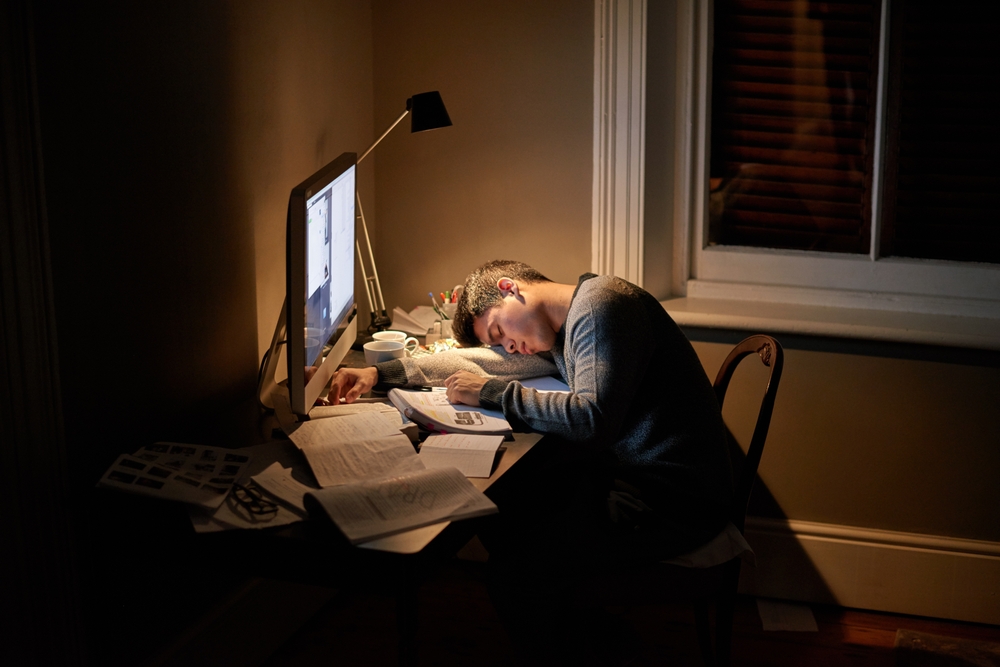
If you’re a college student reading this at 2 a.m. between study sessions, you’re not alone. Approximately 70% of college students get insufficient sleep, and the consequences go far beyond feeling groggy in lectures. Chronic sleep deprivation tanks your GPA, increases anxiety and depression, weakens your immune system, and ironically makes studying take twice as long because your brain can’t process information efficiently.
The good news? You don’t need to overhaul your entire life to sleep better. Here are practical, realistic strategies designed for the chaos of college life.

The Sleep Reality Check
You need 7-9 hours of sleep per night—not 5 hours during the week with weekend catch-up sessions. Your body doesn’t work like a bank account. Sleep debt accumulates, and weekend recovery doesn’t fully restore cognitive function. Research shows that each hour of sleep lost corresponds to a 0.07 decrease in GPA, and students who pull all-nighters consistently perform worse on exams than those who get even modest sleep.

Create a Sleep-Friendly Environment
Even in a dorm, you can make meaningful improvements to creating a sleep sanctuary. Use a sleep mask or cover LED lights from chargers and devices—even small amounts of light suppress melatonin. White noise apps or a small fan can mask hallway conversations and roommate sounds. Keep your room cool (65-68°F is ideal) with a fan or lighter bedding if you can’t control the thermostat.
Most importantly, make your bed a sleep-only zone. Don’t study, eat, or scroll on your phone in bed. Train your brain to associate your bed exclusively with sleep.
Smart Scheduling Strategies
Wake up at the same time every day, including weekends. This consistency anchors your circadian rhythm and is the single most powerful sleep improvement you can make.
Strategic napping can help if you’re sleep-deprived—but only 20 minutes, taken before 3 p.m. Longer naps or late-afternoon naps will interfere with nighttime sleep.
Front-load your week when possible. Completing more work Monday through Wednesday reduces end-of-week stress and Sunday night anxiety that keeps you awake.
Evening Routine Essentials
Create a 30-minute wind-down routine before bed. This might just be brushing your teeth, laying out tomorrow’s clothes, and reading a paper book.
Set a screen curfew 30-60 minutes before bed. Blue light suppresses melatonin, but the bigger problem is that social media and homework are cognitively stimulating. Plug your phone across the room so you’re not tempted.
Cut off caffeine by 2 p.m. Caffeine has a half-life of 5-6 hours, so that 4 p.m. coffee is still 50% active at 10 p.m.
Try the 4-7-8 breathing technique when you can’t quiet your mind: breathe in for 4 counts, hold for 7, exhale for 8. Repeat four times. Other meditation techniques can also be very helpful.
Study Smarter, Not Longer
Well-rested students accomplish in two focused hours what sleep-deprived students struggle through in four. Use the Pomodoro Technique (25 minutes of focused work, 5-minute break) to maintain intensity without burnout. Take advantage of tutoring centers, study groups, and professor office hours to learn material more efficiently than struggling alone at midnight.
Learn to say no. Protecting sleep sometimes means declining social invitations or stepping back from a commitment. Showing up well to fewer things beats showing up exhausted to everything.
When Sleep Problems Persist
If you’ve been lying awake for 20 minutes, get up. Do something boring in dim light until you feel sleepy. This prevents your brain from associating bed with frustrated wakefulness.
Try a “worry journal”—when anxious thoughts arise at night, write them down. This externalizes worry and gives you permission to address it tomorrow rather than ruminating at 3 a.m.
When to Seek Professional Help
Seek help if you experience persistent difficulty sleeping for more than a few weeks, feel excessively sleepy despite adequate time in bed, snore loudly or wake gasping, or struggle to function during the day as these can be helpful in diagnosing sleep apnea. Most campuses offer free counseling services for sleep issues related to anxiety or depression, and student health centers can evaluate for sleep disorders like sleep apnea.
For students in the Los Angeles area who need specialized care beyond campus resources, Dr. Simmons at the Encino Center for Sleep & TMJ Disorders offers comprehensive evaluation and treatment for sleep disorders. You can reach the center at (818) 300-0070 to schedule a consultation.
Start Tonight
Pick one or two changes that feel manageable—maybe setting a consistent wake time and creating a 30-minute screen curfew. Try them for a week and notice what shifts.
Remember: sleep isn’t laziness. It’s the foundation that makes everything else possible. The most successful students aren’t the ones who sleep the least—they’re the ones who’ve figured out how to protect their sleep while managing their responsibilities.
Your challenge: commit to one sleep improvement this week. Your future self—the one who’s alert in class, retains what they study, and actually enjoys college—will thank you.